Seasonal Rhythms Guiding Integrated Planning Across Horse Racing, Tennis, and Basketball
Erik Lehmann · Aug 7, 2026
Seasonal Rhythms Guiding Integrated Planning Across Horse Racing, Tennis, and Basketball
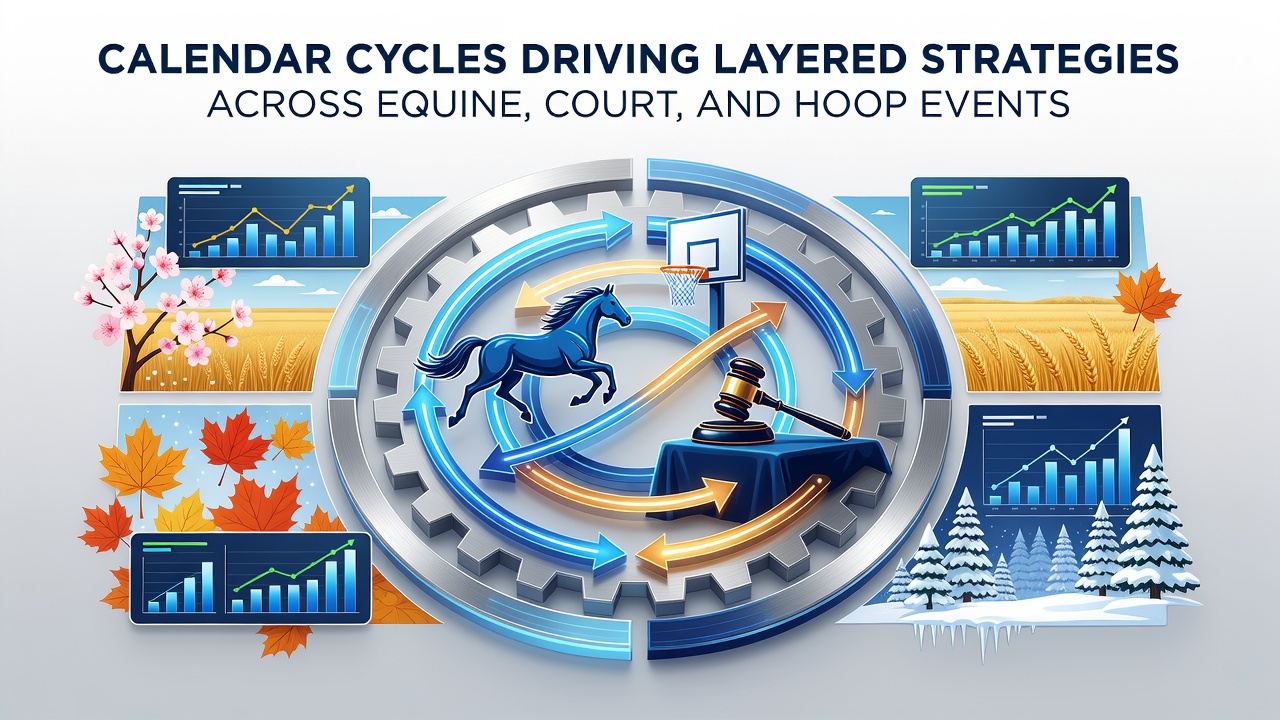
Annual calendars establish predictable frameworks that shape how organizers, coaches, and athletes coordinate activities across horse racing, tennis, and basketball. These timelines create overlapping windows where preparation phases, peak competition periods, and recovery intervals align in specific ways each year. Data from governing bodies shows that major circuits follow fixed patterns tied to weather, venue availability, and historical scheduling traditions.
Equine Event Cycles and Their Influence
Horse racing seasons divide into distinct phases driven by track conditions and regional festivals. In the Northern Hemisphere, spring meetings give way to summer festivals while southern circuits operate on opposite schedules. Observers note that layered preparation begins months ahead, with conditioning programs adjusted according to surface types and distance categories. August 2026 falls during peak northern summer racing, where events like the Arlington Million and various European group races coincide with ongoing training cycles for autumn targets.
Tennis Tour Structures and Court Surfaces
The tennis calendar rotates through hard courts, clay, and grass, forcing players and support teams to adapt strategies around surface-specific demands. Grand Slam events anchor the year, with the US Open occurring in late summer and creating a natural transition point between northern and southern hemisphere seasons. Research from sports institutes indicates that recovery protocols and travel planning intensify around these fixed dates, while smaller tournaments fill gaps that allow for skill refinement between major stops.
August typically brings hard-court swings in North America that overlap with basketball off-season work. Athletes and staff use this period to balance court time with strength maintenance, knowing that the subsequent indoor season will demand different physical outputs.
Basketball Seasons and Hoop Event Overlaps
Basketball leagues operate on winter-centric schedules in most regions, with summer leagues and training camps filling the gaps. The NBA draft and free agency period in June and July set rosters, after which August focuses on individual development and international competitions. According to reports from the International Basketball Federation, national team windows in late summer create additional layers of scheduling that teams must integrate with club obligations.
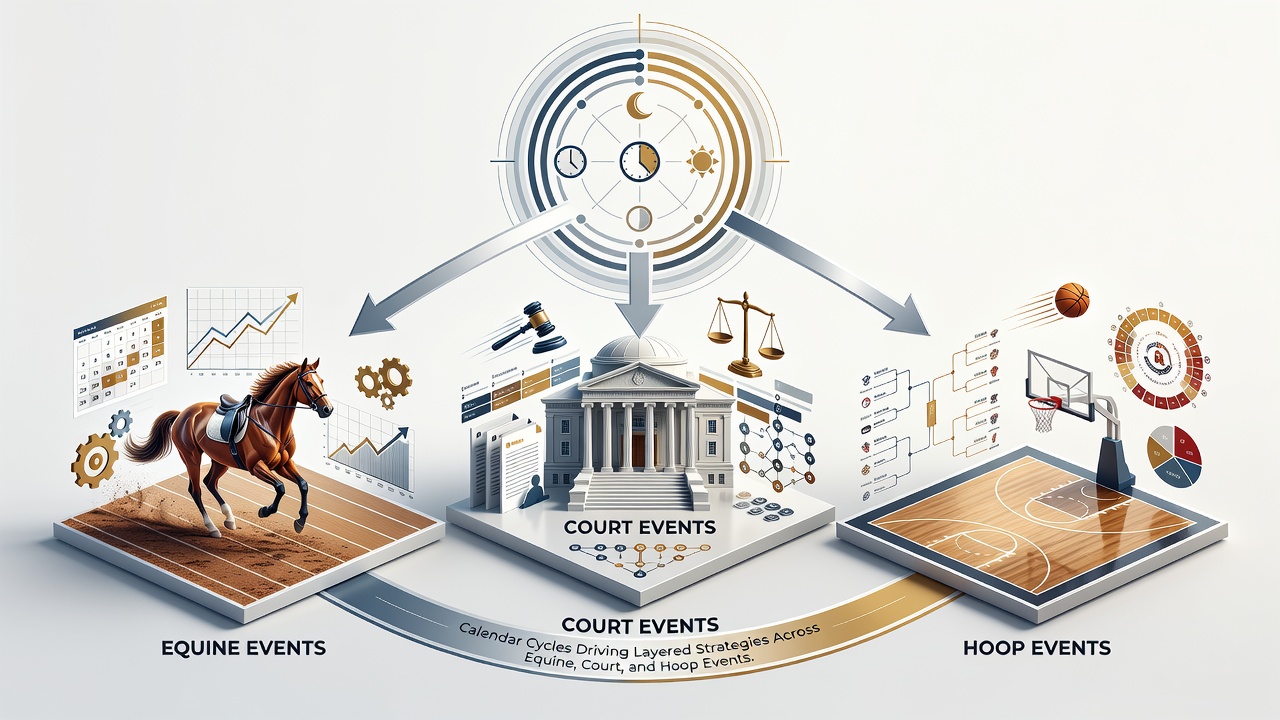
Coaches layer conditioning blocks so that players return to team environments ready for pre-season demands. The same period sees horse racing and tennis events running concurrently, which means shared resources such as medical staff and performance analysts sometimes move between sports when organizations maintain multi-discipline operations.
Cross-Sport Coordination Patterns
Facilities and personnel often support multiple disciplines when calendars permit. A training center might host tennis players in the morning and basketball sessions later, while equine specialists use overlapping downtime for veterinary assessments. Government data from Sport Australia and similar bodies in other regions shows increased facility utilization rates during shoulder seasons when one sport winds down and another ramps up.
Travel logistics become another layered element. Athletes crossing time zones for August events in 2026 must account for jet lag alongside competition demands, prompting teams to build buffer days into itineraries. Performance metrics collected across these sports reveal consistent patterns in how rest intervals affect subsequent outputs, regardless of the specific activity.
Resource Allocation Across Disciplines
Budget planning follows calendar milestones rather than arbitrary dates. Equipment orders, venue bookings, and staff contracts align with known event clusters. One study from a European sports research center found that organizations maintaining presence in horse racing, tennis, and basketball achieved higher equipment utilization when they synchronized purchases around shared seasonal peaks.
Medical and nutritional support follows similar rhythms. Bloodwork schedules, supplement cycles, and rehabilitation programs get mapped onto the combined calendar so that no discipline experiences gaps in care. This approach reduces downtime and keeps multiple programs moving forward without constant readjustment.
Future Calendar Adjustments
Organizers periodically review dates to accommodate new markets or broadcast requirements. Changes announced for 2026 and beyond include minor shifts in certain tennis events and basketball pre-season tournaments. Horse racing bodies continue to evaluate fixture lists against climate patterns, particularly in regions experiencing extended summer heat. These adjustments ripple through layered strategies as support teams recalibrate preparation timelines accordingly.
Conclusion
Calendar cycles provide the structural backbone that allows coordinated approaches to develop across horse racing, tennis, and basketball. Fixed dates create natural checkpoints where preparation, competition, and recovery intersect in measurable ways. As August 2026 approaches, these overlapping timelines will once again test the ability of organizers and athletes to manage multiple demands within a single seasonal framework.