The Architecture of Multi-Sport Wager Layers: Incentives and Aggregators in Horse Racing, Gridiron, and Basketball
Erik Lehmann · Oct 24, 2026

The Architecture of Multi-Sport Wager Layers: Incentives and Aggregators in Horse Racing, Gridiron, and Basketball
Layered wager construction relies on combining membership incentives with data from odds aggregators to span equine events, gridiron contests, and court sports in structured sequences, and observers note that these methods draw on real-time line movements reported across multiple platforms as of October 2026. Data from industry reports indicate that operators release targeted reload offers and deposit matches that participants apply sequentially to initial stakes in horse racing before shifting portions into football totals or basketball spreads, while aggregators compile those lines into unified feeds that highlight small discrepancies between venues.
Membership Incentives and Their Sequential Application
Membership programs issue welcome bonuses, cashback tiers, and free bet credits that function as additional layers atop base wagers, and these credits often carry rollover requirements tied to specific sports categories. Research from the Australian Gambling Research Centre shows that participants typically allocate the first incentive layer to equine racing because morning line updates occur earlier in the day, creating windows for subsequent transfers into gridiron afternoon or evening lines. Aggregators display these incentives alongside raw odds, allowing users to calculate effective prices after bonus absorption without manual cross-referencing across separate bookmaker sites.
Operators structure incentives so that a percentage of the credited amount must cycle through designated markets, and this requirement pushes activity toward high-volume events such as thoroughbred meetings or professional basketball schedules. Those who track aggregator outputs observe that the same membership credit can support a primary horse racing selection, a secondary gridiron point spread adjustment, and a tertiary court sport total when the aggregator flags correlated movement in implied probabilities.
Odds Aggregators as Central Data Hubs
Odds aggregators pull live prices from dozens of licensed operators and present them in comparable formats, and this consolidation reduces the time needed to identify viable layering sequences across three distinct sport types. Figures released by the Nevada Gaming Control Board reveal steady growth in aggregator usage among multi-state operators during 2026, with peak activity coinciding with overlapping racing calendars and professional football seasons. The platforms flag when a membership incentive alters the effective decimal or American odds, giving users a single interface for constructing the next wager layer.
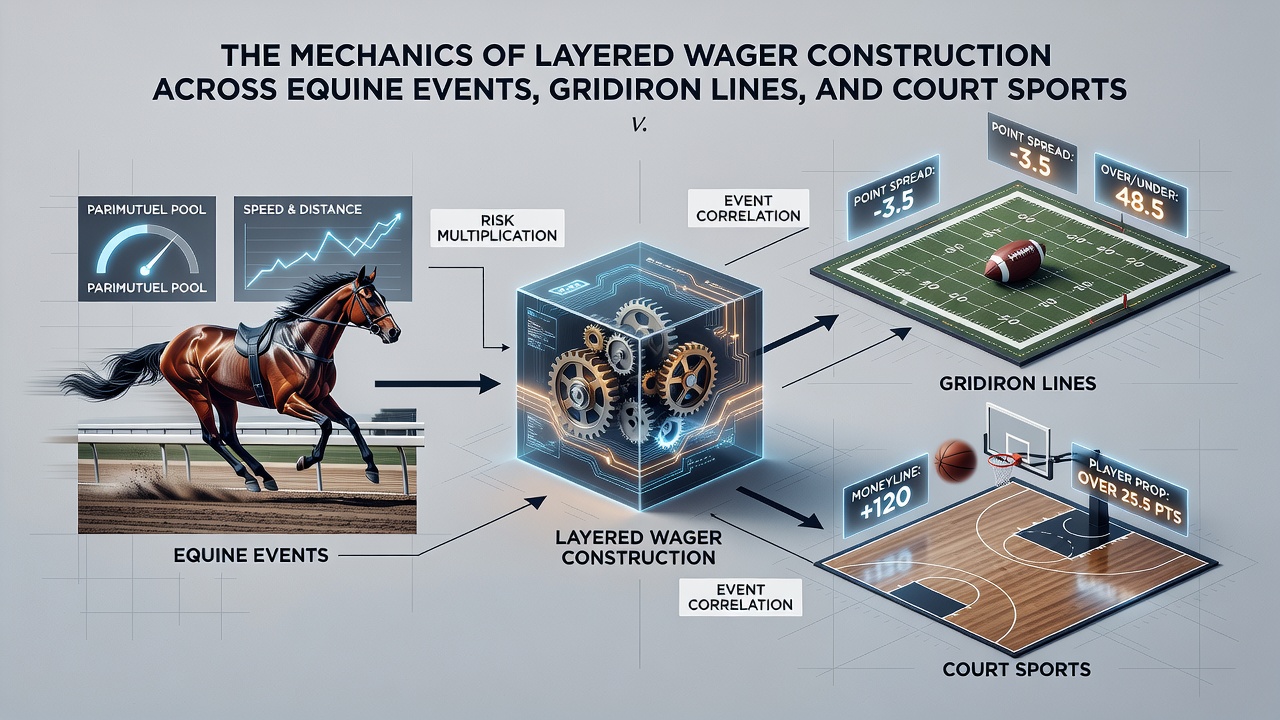
Aggregators also incorporate historical line data that helps map how incentives influence closing prices in basketball and tennis, and this historical overlay supports the placement of later layers once early equine results become known. Participants often route a portion of winnings from an initial horse racing incentive into a gridiron teaser or basketball parlay when the aggregator shows favorable movement after the first event concludes.
Cross-Sport Layer Sequencing Mechanics
Layer construction typically begins with an equine event because racing schedules provide multiple daily opportunities, and the resulting outcome then feeds capital or credits into gridiron or court sport selections later the same day. Aggregator algorithms highlight instances where an incentive-adjusted price in one sport aligns with an unadjusted line in another, creating the numerical conditions for the next layer. Data compiled by the European Gaming and Betting Association indicate that such sequencing accounts for measurable portions of total handle during months when racing festivals overlap with professional basketball tip-offs.
Each layer carries its own settlement timeline, and the staggered results allow participants to reallocate settled funds or remaining credits before the next market closes. Aggregators display countdown timers alongside incentive eligibility windows, which helps maintain the sequence without missing rollover deadlines tied to specific sports categories.
Regulatory Context and Reporting Requirements
Regulatory bodies require operators to publish clear terms for incentive rollover across different sports, and these disclosures appear within aggregator interfaces so users can verify compliance before committing layers. In October 2026 several jurisdictions updated reporting standards for multi-sport incentive usage, prompting aggregators to add compliance flags that note when a given layer satisfies or conflicts with regional rules. Those monitoring aggregator feeds note that updated flags reduce instances of inadvertent violations when equine, gridiron, and court sport layers are combined within a single membership cycle.
Conclusion
The mechanics of layered wager construction depend on the interaction between membership incentives that supply additional stake value and aggregator platforms that surface comparable odds across equine, gridiron, and court sports. Data from multiple regulatory and research sources show consistent patterns of sequential application that respect settlement timelines and rollover conditions, and these patterns continue to evolve with the introduction of new incentive formats and aggregator features through late 2026.