Velocity Metrics Across Disciplines: Connecting Race Times, Rally Durations, and Possession Averages to Refine Layered Multi-Sport Selection Frameworks
Erik Lehmann · Aug 23, 2026
Velocity Metrics Across Disciplines: Connecting Race Times, Rally Durations, and Possession Averages to Refine Layered Multi-Sport Selection Frameworks
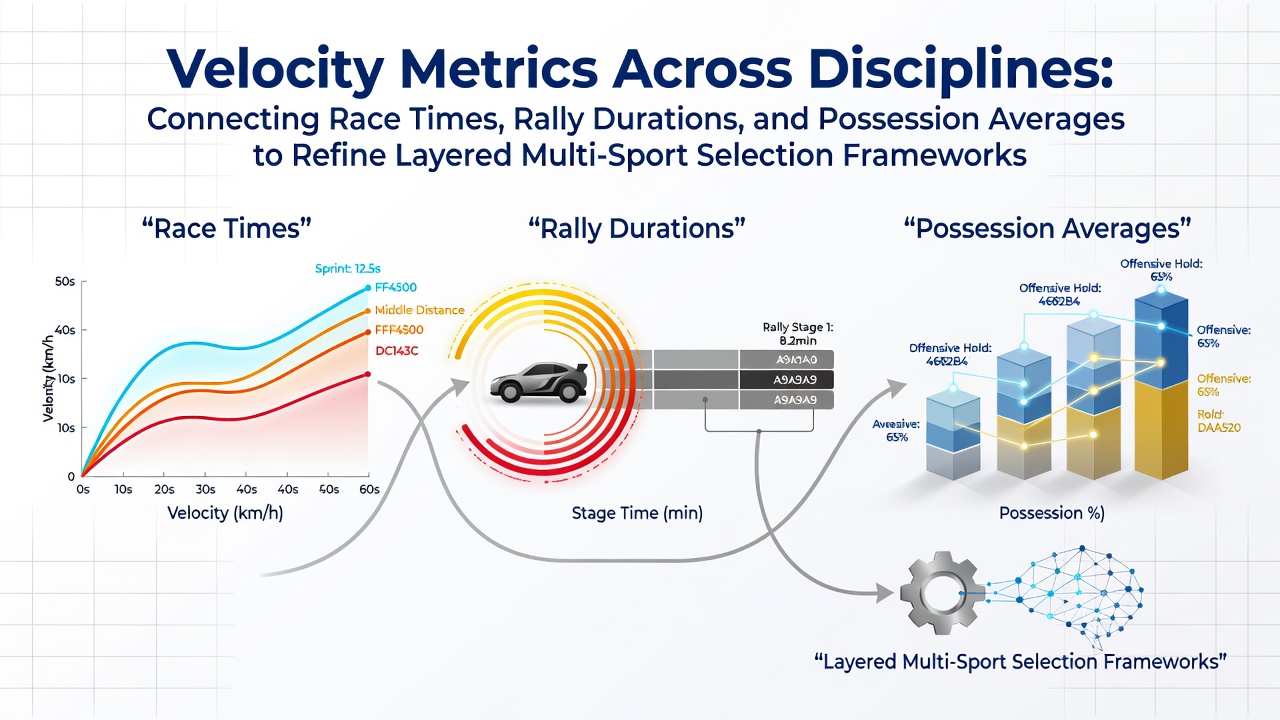
Velocity metrics provide measurable links between performance indicators in different sports, and researchers have applied these connections to build selection frameworks that evaluate athletes across multiple disciplines. Race times in track events establish baseline speed profiles, rally durations in tennis reflect sustained movement efficiency, and possession averages in team sports highlight decision-making under varying intensities, according to data compiled by international sports bodies. These elements combine in layered models that support talent identification programs, coaching adjustments, and performance forecasting systems used by national training centers.
Establishing Core Velocity Benchmarks from Track Events
Track and field competitions supply precise race time data that form foundational velocity layers in multi-sport frameworks, with events ranging from 100-meter sprints to longer distances offering segmented speed measurements. Analysts record split times at fixed intervals, then calculate average velocities while accounting for acceleration phases and fatigue curves, and organizations such as World Athletics publish standardized datasets that allow cross-comparison with other sports. In August 2026, upcoming championship cycles are expected to generate updated benchmarks that selection committees will integrate into existing models, because new timing technologies deliver higher resolution data points for refinement.
Studies conducted by the International Olympic Committee have shown how elite sprinters maintain peak velocities that correlate with explosive power outputs observed in other speed-dominant activities, which enables scouts to flag transferable traits when evaluating candidates for multi-sport pathways. These metrics undergo normalization against age, gender, and event-specific demands before entering layered frameworks, ensuring consistent application across diverse athletic populations.
Integrating Rally Durations from Racket Sports
Tennis rallies produce duration metrics that capture repeated high-intensity efforts separated by brief recovery windows, and these patterns add endurance-velocity dimensions to selection frameworks already shaped by track data. International Tennis Federation reports track average rally lengths across surfaces and formats, revealing how players sustain movement velocities during extended exchanges that often exceed thirty seconds. Observers note that such durations align with intermittent sprint profiles seen in track training, allowing analysts to map racket sport demands onto broader velocity scales.
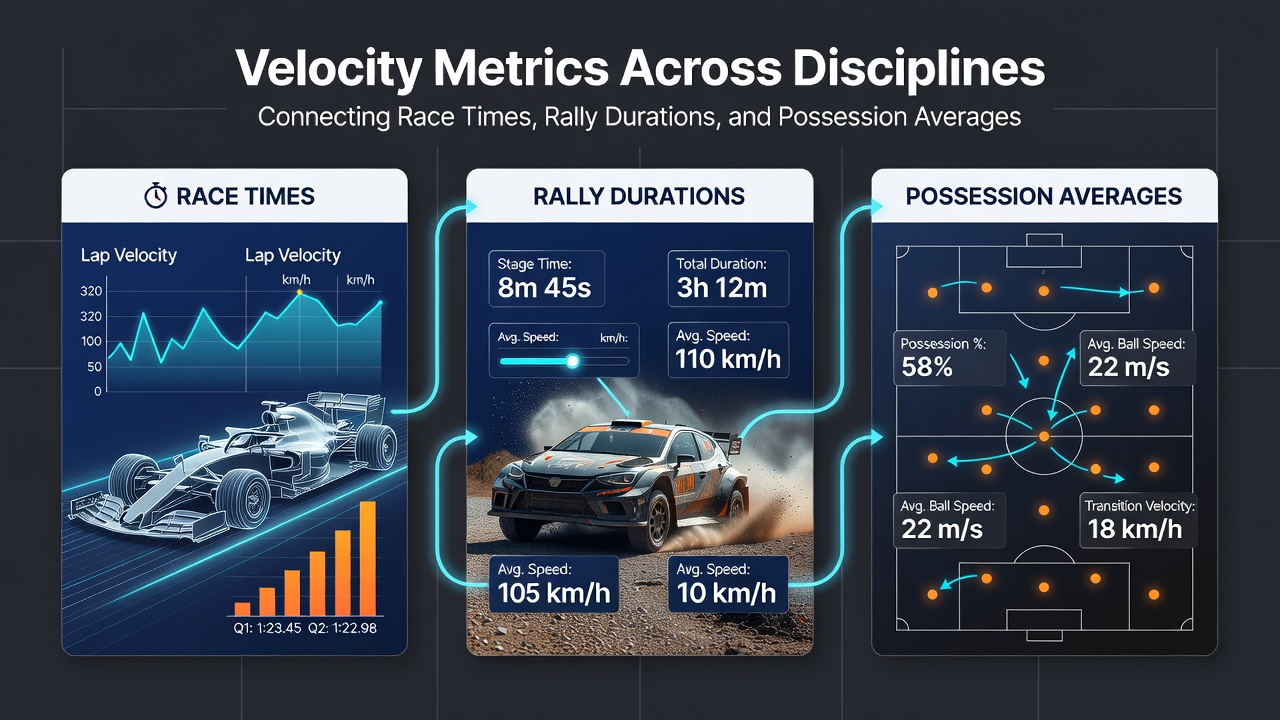
Selection protocols in combined programs, such as those operated by the Australian Institute of Sport, incorporate rally duration statistics to identify athletes who demonstrate efficient velocity maintenance under variable workloads. Data from European tennis academies further indicate that players averaging longer rallies exhibit recovery velocities comparable to middle-distance runners, which strengthens the case for unified metric layers. These integrations occur through algorithmic weighting that balances raw speed from track events against sustained output from rallies, producing composite scores used in athlete profiling.
Layering Possession Averages from Team Sports
Team sports contribute possession averages that quantify time spent controlling play at specific velocities, and frameworks connect these figures to race times and rally durations to create comprehensive evaluation matrices. FIFA and UEFA technical reports document how possession phases correlate with player movement speeds during matches, while NCAA basketball analytics provide parallel datasets on transition velocities during fast breaks. Analysts combine these with track and tennis metrics to assess decision velocity, defined as the speed at which athletes process and act on positional information.
Research from Canadian Sport Institute Pacific demonstrates that athletes with high possession retention rates often display velocity consistency across sports, because the cognitive load of maintaining control mirrors the pacing required in extended rallies or distance races. Layered models adjust for sport-specific rules, such as offside constraints in football or court dimensions in basketball, yet retain core velocity calculations that permit direct comparisons. Updated figures released ahead of major 2026 tournaments will feed into these systems, supporting real-time adjustments in selection criteria.
Refining Multi-Sport Selection Frameworks Through Metric Integration
Combined frameworks apply weighted algorithms that fuse race times, rally durations, and possession averages into tiered assessments, and governing bodies like the IOC Olympic Solidarity program have funded pilot projects testing these approaches in youth development pathways. The process begins with raw data ingestion from timing systems and match tracking software, followed by normalization steps that align units across disciplines before composite scoring occurs. Experts at research institutions have mapped correlations showing that athletes scoring above median thresholds in two or more velocity categories advance more frequently through selection stages.
Implementation involves iterative validation against historical performance records, with adjustments made when new datasets from events like the 2026 Commonwealth Games become available. Such refinements enhance predictive accuracy without altering foundational metric definitions, and regional variations in data collection methods receive calibration through standardized protocols issued by international federations.
Conclusion
Velocity metrics drawn from track, tennis, and team sports continue to shape layered selection frameworks that prioritize measurable connections between disciplines. Race times supply speed foundations, rally durations add endurance components, and possession averages introduce contextual decision layers, with integration occurring through established analytical pipelines supported by organizations across multiple continents. As datasets expand through 2026 competitions, these frameworks will undergo further calibration while maintaining objective, data-driven structures that assist talent pathways worldwide.